


The cost and process of optimizing viewability per page [infographic]
By Asaf Shamly | January 28, 2021
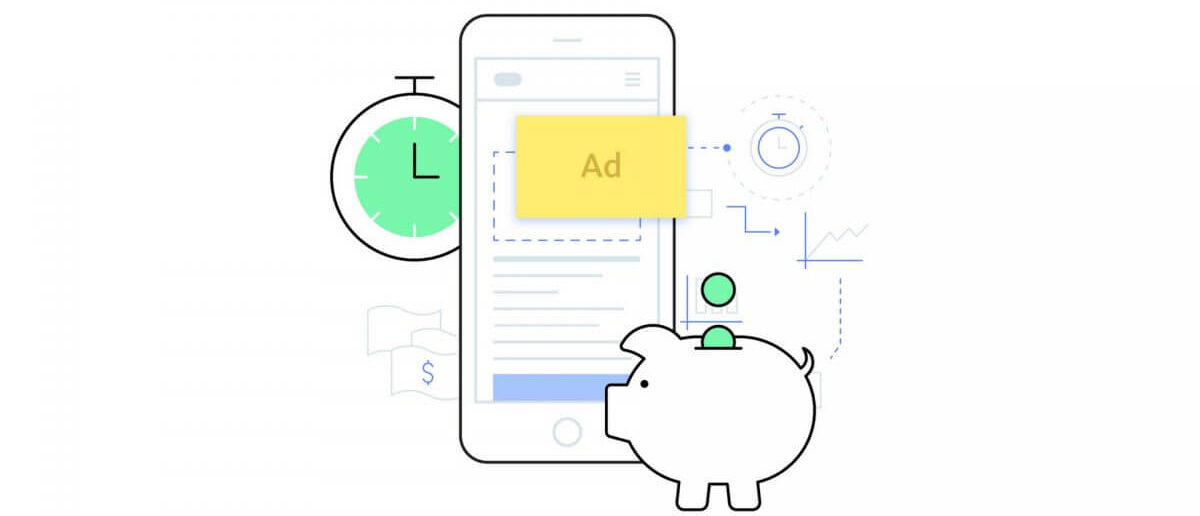
Viewability is not a challenge for advertisers… all they need is to ask for it and track it.
Viewability is a publisher challenge
An underperforming media is something only they can fix. The main reason for inefficient media is non-viewable ad placements. Ironically, these placements that are the publisher’s 2nd most important asset after content are created, managed and optimized almost the same way they were 21 years ago – manually, periodically, statically and at a macro level.
Publishers can’t optimize their media for viewability per any given article due to lack of ROI. Check our infographic below on the process to optimize viewability per article, its costs, and alternative options.
Latest Articles
-
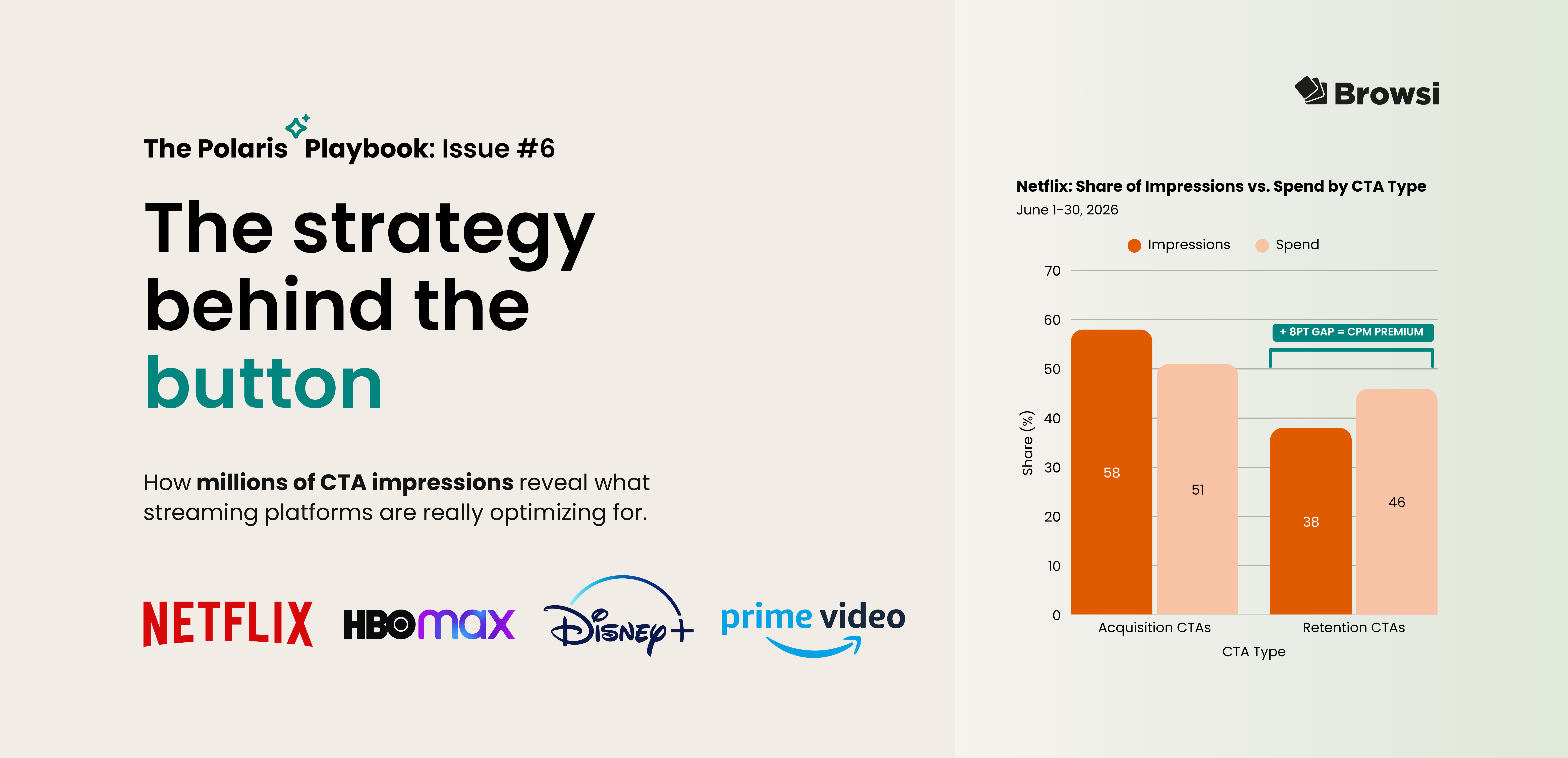
The strategy behind the button: What millions of CTA impressions reveal about competitive strategy
What can a single CTA button reveal about a company's marketing strategy? By analyzing millions of Meta ad impressions, PolarisAI uncovers how Netflix, Prime Video, HBO Max, and Disney+ use "Sign Up," "Watch More," and other CTAs to prioritize subscriber acquisition, viewer engagement, and broader competitive strategy.
View Now -
The 6-step framework for turning signals into strategy
Competitive intelligence only matters if it leads to action. In this edition of The Polaris Playbook, we use Honda and five competitors to demonstrate a practical six-step framework for turning competitive signals into strategic recommendations marketers can actually use.
View Now -
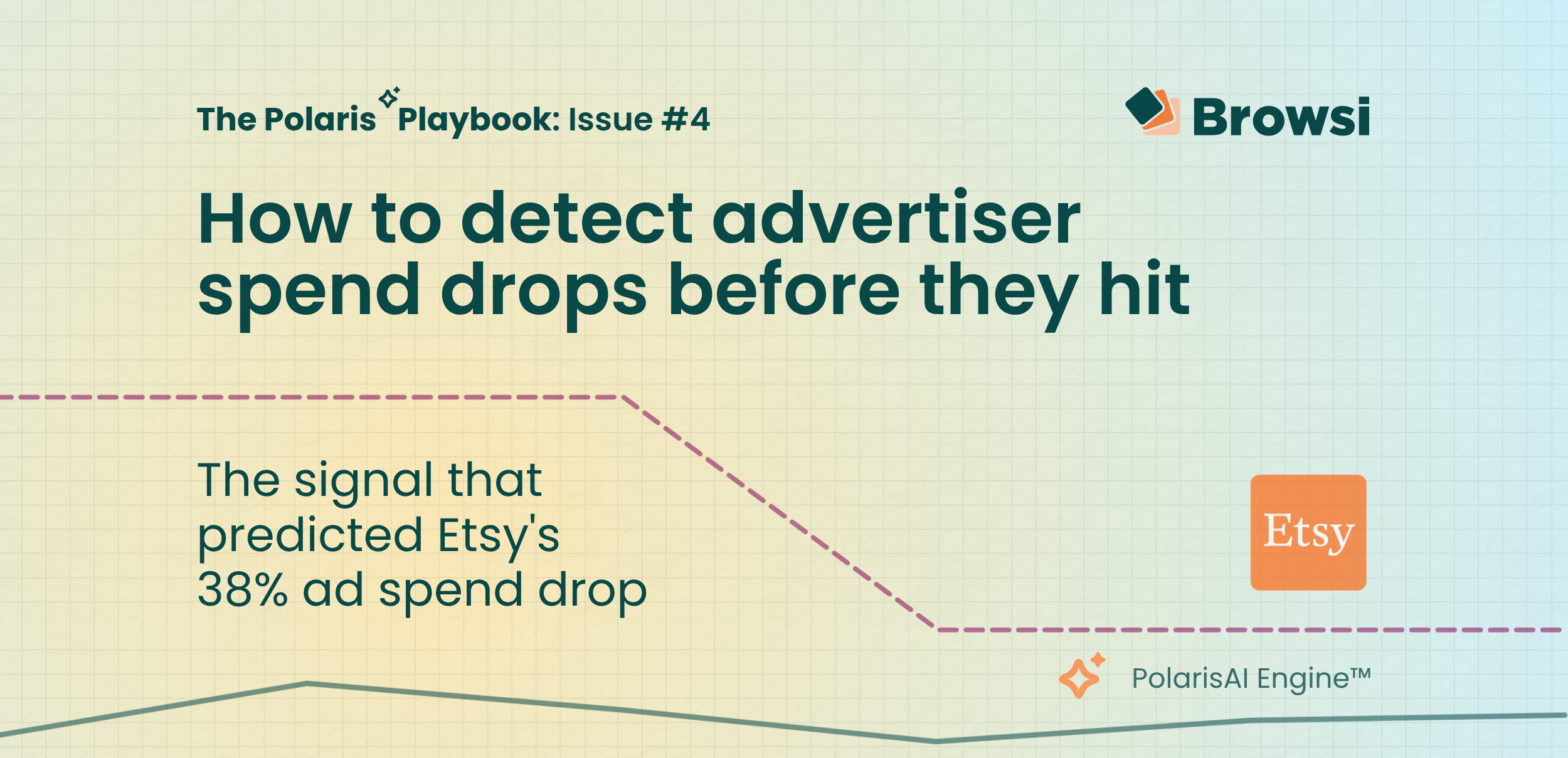
How to Detect Advertiser Spend Drops Before They Hit
Etsy's earnings confirmed what PolarisAI had already seen: a major pullback in marketing investment. By analyzing competitive signals before quarterly results were released, PolarisAI projected a 38% decline in spend while the market was still reacting to the underlying changes. The result highlights a growing reality for marketers: the most valuable competitive insights often emerge long before earnings calls explain them.
View Now