

Why Ad Tech Might Be Missing the Target: The Blind Spot OpenTTD Reveals
By Asaf Shamly | March 11, 2026

The Trade Desk just launched OpenTTD, a new portal designed to centralize integrations across its ecosystem.
According to AdExchanger, the system brings together APIs, analytics, and partner tools into a single environment for companies working with The Trade Desk.
On the surface, it’s a workflow improvement.
One login.
One interface.
One place to manage integrations.
But the real story isn’t the product itself. It’s what the product represents.
Platforms are becoming operating systems
For most of programmatic advertising’s history, the ecosystem looked like a collection of separate tools.
DSPs handled buying.
SSPs managed supply.
Data companies sold audiences.
Measurement vendors analyzed performance.
Each system operated independently, and marketers stitched everything together themselves.
But that model is starting to change.
Across the industry, companies are expanding their environments to host more of the workflow.
– DSPs like The Trade Desk are building broader partner ecosystems.
– Platforms like Google continue integrating media buying, analytics, and measurement into one environment.
– Retail media networks like Amazon Ads are creating closed-loop systems where planning, activation, and attribution all happen inside the same platform.
OpenTTD is another sign that ad tech platforms are evolving into ecosystems.
The opportunity… And the blind spot
There’s an obvious advantage to this shift.
Centralized ecosystems reduce friction, meaning:
Fewer integrations.
Fewer dashboards.
Cleaner workflows.
But ecosystems introduce a different challenge:
They show you what happens through the platform.
Not everything that’s happening across the market.
That distinction matters more than it might seem.
Because advertising competition doesn’t happen inside one dashboard.
It happens across the open web.
Across publishers.
Across campaigns.
Across competitors investing in the same audiences.
And those signals rarely appear inside a single platform’s reporting.
Why Competitive Context Matters More Than Ever
Most marketers can answer questions about their own performance.
How their campaigns are performing.
Where their budgets are going.
Which channels are delivering results.
What’s harder to see is:
Who is increasing their presence in your category?
Which audience interests are competitors prioritizing?
Where is ‘share of voice’ shifting?
Those dynamics often shape outcomes more than campaign optimization itself.
But they remain surprisingly difficult to see.
Here’s the bottom line
OpenTTD is a sign of where the industry is heading.
Ad tech platforms are becoming larger, more integrated ecosystems designed to simplify execution.
But as those ecosystems expand, they also make it easier to focus on only the slice of the market you can see.
And that’s where the real risk begins.
Because advertising success isn’t determined by performance inside a platform.
It’s determined by how you compete across the market as a whole.
The brands that win aren’t just optimizing campaigns.
They’re understanding how their visibility compares to everyone else fighting for the same attention.
And in a market as complex as digital advertising, that broader view is no longer optional.
It’s the difference between reacting to the market and staying ahead of it.
Latest Articles
-
The World Cup’s best advertising window isn’t the final.
Conventional wisdom says the knockout rounds are the best time to advertise during the FIFA World Cup. PolarisAI's analysis of Meta campaigns across major beverage brands tells a different story. By comparing Coca-Cola's official World Cup creative with Pepsi's tournament-adjacent strategy, we found that advertising efficiency peaked earlier in the tournament, even as audiences continued to grow.
View Now -
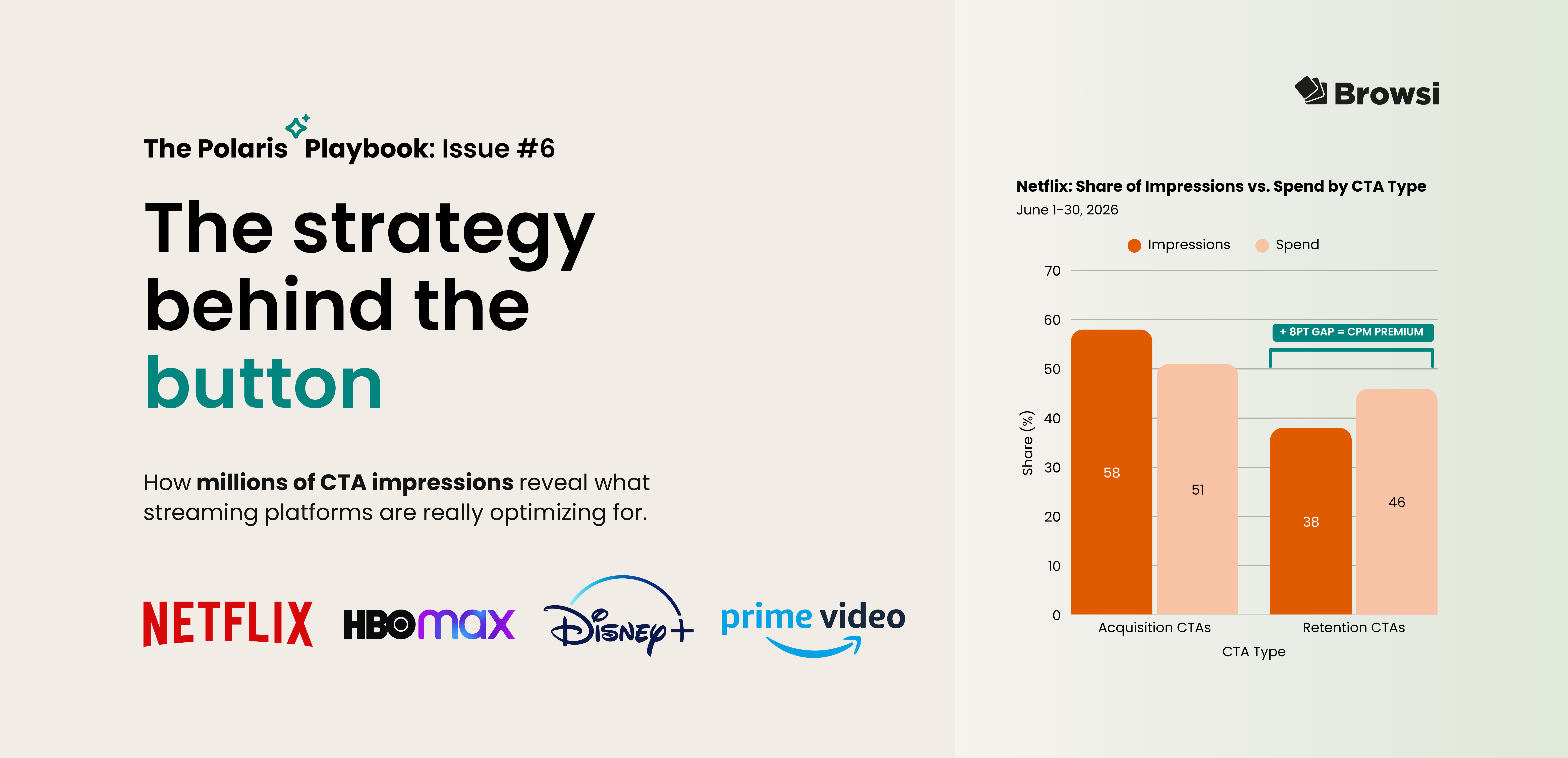
The strategy behind the button: What millions of CTA impressions reveal about competitive strategy
What can a single CTA button reveal about a company's marketing strategy? By analyzing millions of Meta ad impressions, PolarisAI uncovers how Netflix, Prime Video, HBO Max, and Disney+ use "Sign Up," "Watch More," and other CTAs to prioritize subscriber acquisition, viewer engagement, and broader competitive strategy.
View Now -
The 6-step framework for turning signals into strategy
Competitive intelligence only matters if it leads to action. In this edition of The Polaris Playbook, we use Honda and five competitors to demonstrate a practical six-step framework for turning competitive signals into strategic recommendations marketers can actually use.
View Now