

Visibility Multiplies – But Only If You Measure What Matters
By Asaf Shamly | October 28, 2025

Earlier this year, Ahrefs analyzed 75,000 brands to understand which signals drive visibility in Google’s AI Overviews. The strongest correlation wasn’t backlinks or domain rating. It wasn’t even branded traffic.
It was mentions.
Brands with the most web mentions showed up to 10 times more often in AI Overviews than their peers. In other words: presence creates more presence. Once you’re visible, you get ..more visible.
Obvious, right? But here’s the catch: visibility isn’t the same as impact.
What AI Mentions Reveal About Media Strategy
If AI systems reward visibility loops, advertisers face a parallel challenge in digital media.
It’s possible to check every technical box – meet the viewability threshold, land a premium placement, even serve impressions at scale – and still have your ads disappear in the noise.
The same way backlinks turned out to matter less than mentions for AI visibility, raw impression counts matter less than context for ad performance.
The question isn’t was your ad there, it’s did it stand a chance to matter?
The Signals That Actually Compound
In AI search, unlinked mentions outperform backlinks because they do a better job reflecting real-world conversation.
In advertising, the equivalent is attention and context signals – the factors that determine whether visibility compounds or evaporates. Think:
– Time in view: Did the ad remain on screen long enough to register?
– Placement quality: Was the fold cluttered, refreshed, or ignored?
– Geo performance: Are certain markets consistently underdelivering, dragging down ROI?
These signals define whether spend generates real impact, or ends up wasted.
The Blind Spot: Benchmarking
Another lesson from the Ahrefs study: 26% of brands had zero mentions in AI Overviews. They weren’t even in the game.
Advertisers face the same risk if they don’t benchmark against competition. You can’t truly know how your creative performed if you don’t see how it stacked up relative to others in the same space. Share of voice, side-by-side comparisons, and competitive patterns are the missing context that explains the “why” of what happened (hey, Simon Sinek).
Without this data, you’re optimizing blindly.
The Takeaway for Advertisers
AI research highlights what media teams already sense: visibility compounds, but only when tied to the right signals.
Advertisers who measure success by vanity metrics, will keep mistaking presence for performance. Those who bring in context – attention, competition, environment – will start to see where dollars actually move the needle.
Let’s stop measuring who showed up the most, and start understanding why they showed up, and if it actually.. mattered.
Latest Articles
-
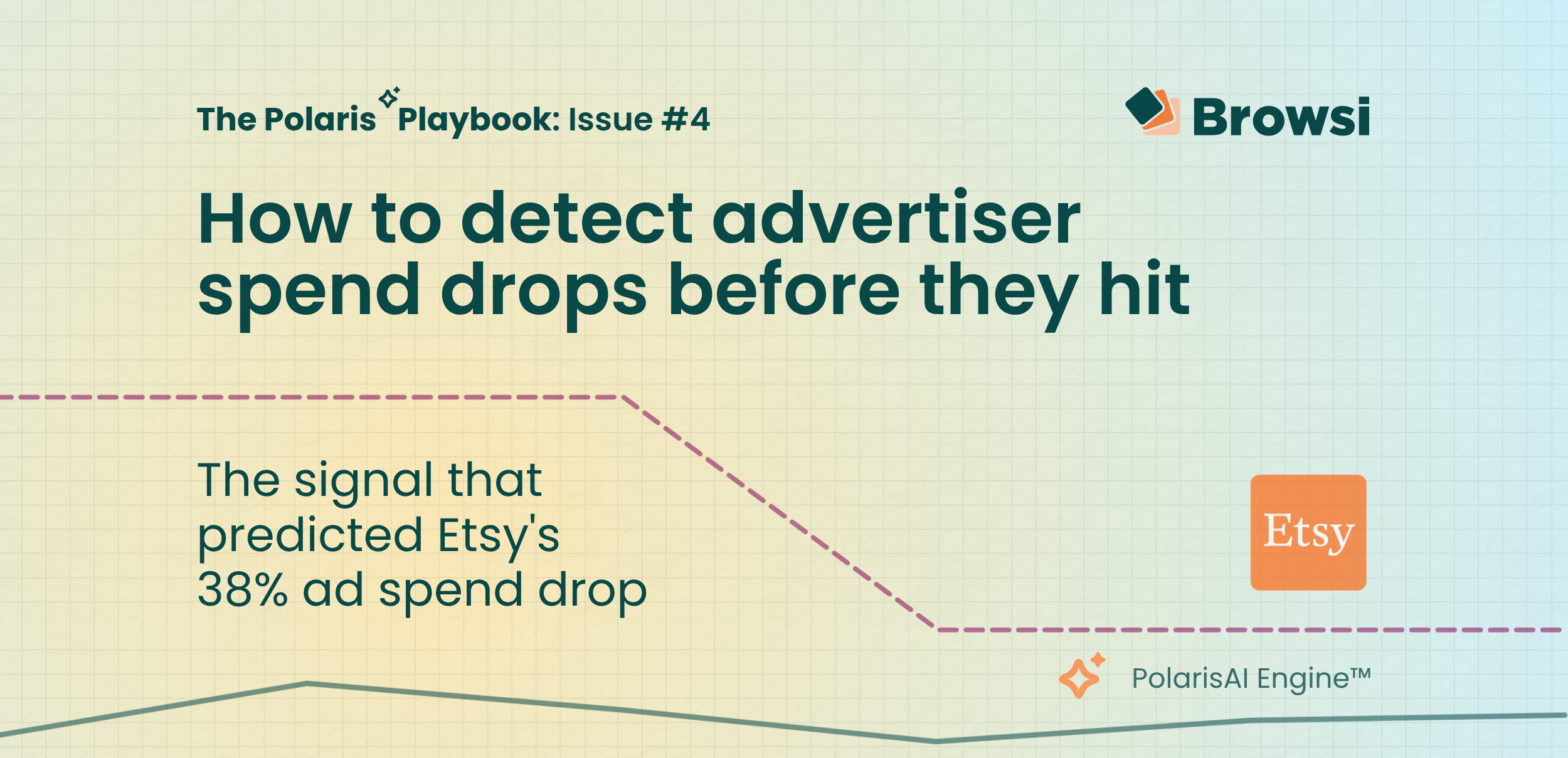
How to Detect Advertiser Spend Drops Before They Hit
Etsy's earnings confirmed what PolarisAI had already seen: a major pullback in marketing investment. By analyzing competitive signals before quarterly results were released, PolarisAI projected a 38% decline in spend while the market was still reacting to the underlying changes. The result highlights a growing reality for marketers: the most valuable competitive insights often emerge long before earnings calls explain them.
View Now -

How Accurate is Browsi’s Data? Tried and Tested.
Most marketers trust competitive spend data without questioning where the numbers come from. We tested PolarisAI Engine™ against the only benchmark that matters: what advertisers actually reported in their earnings calls. The result was an 87% correlation across five major brands, revealing the difference between data that looks confident and data grounded in reality.
View Now -
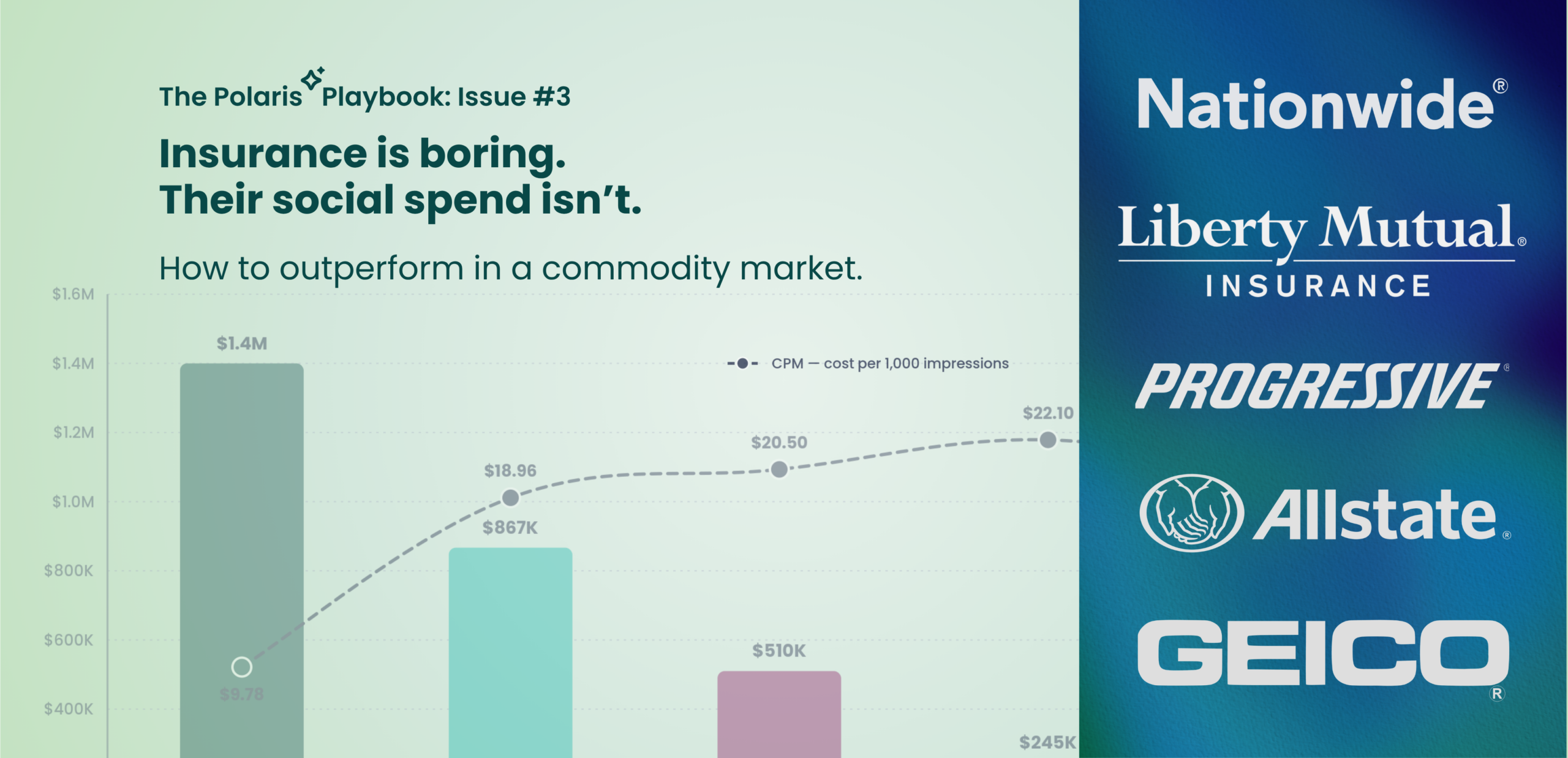
Insurance is Boring. Their Social Spend Isn’t.
Insurance products may look the same, but advertising performance doesn’t. In this edition of the Polaris Playbook, we analyze how Progressive, GEICO, Allstate, Liberty Mutual, and Nationwide allocate social ad spend — and uncover why Progressive’s CPM is more than 50% lower than competitors despite being the category’s biggest spender. The data reveals a broader competitive advantage hidden inside the auction itself.
View Now